

✅ Quick reference: Six essentials for packing on lean muscle without the fat
If you want your diet and training to really pack on the lean muscle, make sure your routine covers all six essential components below. 💪
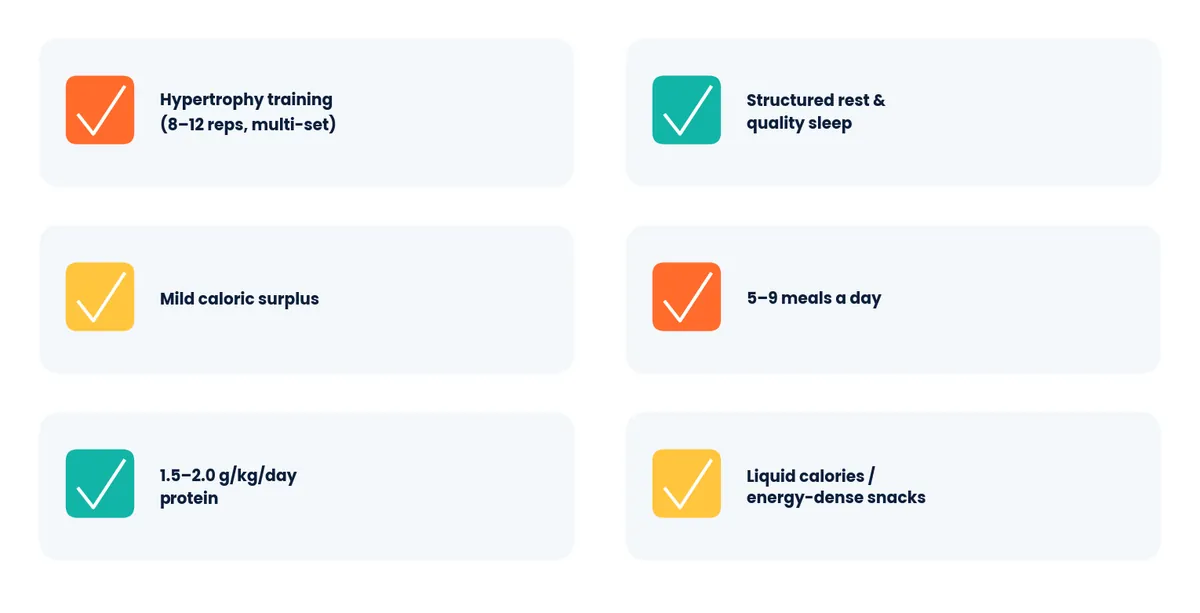
🏋️ Hypertrophy-focused resistance training (8–12 reps per set, multiple sets)
😴 Adequate recovery with structured rest and quality sleep
🔥 A solid energy intake to keep a mild caloric surplus
🍽️ 5 to 9 meals a day to help manage food volume
🥩 Targeted protein intake of 1.5 to 2.0 g/kg/day
🥤 Smart use of liquid calories or energy-dense snacks when you're short on appetite or time
Here's your complete guide to figuring out your daily macronutrient targets, plus a structured 5-to-9 meal daily eating schedule to help you nail your clean bulking plan. 🧮
🧮 How to Calculate Your Daily Macronutrient Targets
To build muscle without piling on excess fat, you need to calculate your macronutrients based on your body weight and training needs.
🥩 Step 1: Calculate Your Daily Protein Target
Muscle is made up of about 20% protein, so your protein needs go up significantly when you're trying to gain weight. While the standard Recommended Dietary Allowance (RDA) for sedentary adults is 0.8 g/kg/day, athletes who are strength training should aim for 1.6 to 1.7 g/kg/day.
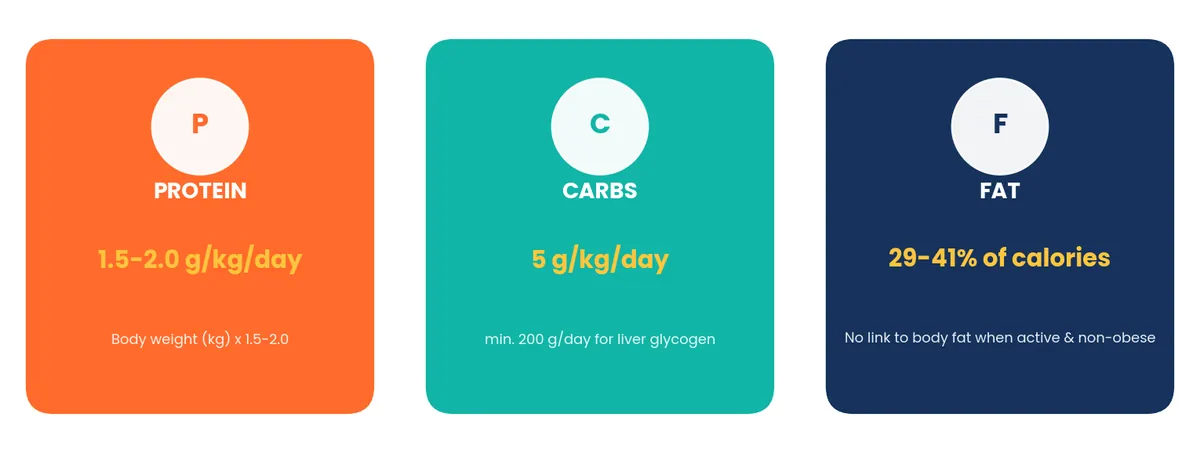
To really support clean mass gain, shoot for 1.5 to 2.0 g/kg/day of protein.
📐 Formula
Body weight (in kg) × 1.5 to 2.0 g/kg/day
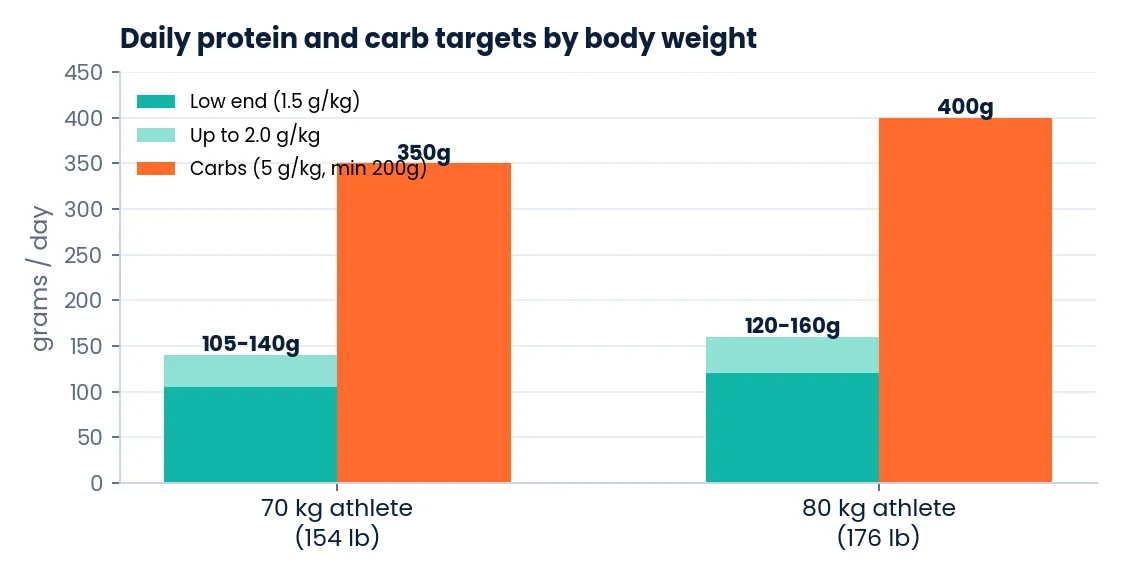
Example, 70 kg (154 lb) athlete: 105 g to 140 g of protein per day
Example, 80 kg (176 lb) athlete: 120 g to 160 g of protein per day
🍚 Step 2: Calculate Your Daily Carbohydrate Target
Carbohydrates play a crucial role in replenishing glycogen stores, which are essential for high-intensity weight training. To keep muscle glycogen levels up for those intense, energy-demanding sports, a baseline intake of 5 g/kg/day is recommended. Plus, it's important to hit a minimum of 200 g/day of carbohydrates to maintain liver glycogen stores.
📐 Formula
Body weight (in kg) × 5.0 g/kg/day (with a minimum of 200 g/day)
A 70 kg (154 lb) athlete would need about 350 g of carbohydrates per day.
An 80 kg (176 lb) athlete would require around 400 g of carbohydrates per day.
🥑 Step 3: Calculate Your Daily Dietary Fat Target
Studies indicate that there's no direct link between the percentage of dietary fat and body fat percentage in active, non-obese individuals who aren't overeating. Elite male athletes usually get about 29% to 41% of their total calories from fat, while elite female athletes tend to consume between 29% and 34%.
💡 For hardgainers
For those who find it tough to eat large portions, adding healthy dietary fats is a fantastic way to increase caloric intake without feeling overly full.
References
- Grandjean, A. (1999). Nutritional Requirements to Increase Lean Mass. Clinics in Sports Medicine, 18(3), 623–633. W.B. Saunders Company / Elsevier.
- DeSantis, A. (2020). Macro Cookbook for Men: 7-Day Meal Plans, Recipes, and Workouts for Fat Loss, Muscle Gain, and Health. Rockridge Press / Google Books.