


🥣 Based on: Fang et al. (2026) meta-analysis · Frontiers in Endocrinology · 1,030 participants, 37 studies
🌅 The Morning Metabolism Reset
For many people managing diabetes, breakfast can be a source of stress. This tension often stems from the "Dawn Phenomenon," a natural increase in blood sugar that happens in the early hours of the day. But here's the good news: research points to a clear path in morning nutrition that can transform this challenge into a chance for better health.
Breakfast isn't just about filling your stomach; it plays a crucial role in signaling your body's internal clock, helping to reset its regulatory systems for the day ahead. A groundbreaking meta-analysis published in Frontiers in Endocrinology in 2026 has shed light on this topic. By analyzing data from 1,030 participants across 37 studies, including 25 key randomized controlled trials, researchers pinpointed the specific combinations of macronutrients that effectively "tame" those morning spikes and enhance long-term blood sugar control. 🔬
1,030 PARTICIPANTS ANALYZED |
37 STUDIES |
25 RANDOMIZED CONTROLLED TRIALS |
2026 META-ANALYSIS PUBLISHED |
|---|
🥚 The 0.5% Advantage: Why Whey Protein Is the Long-Game Winner
One of the standout findings from the latest clinical research is the power of high-protein breakfasts—especially those featuring eggs or whey protein. While many individuals focus on their immediate blood sugar readings after meals, it turns out that protein is the key player in achieving long-term glycemic stability.
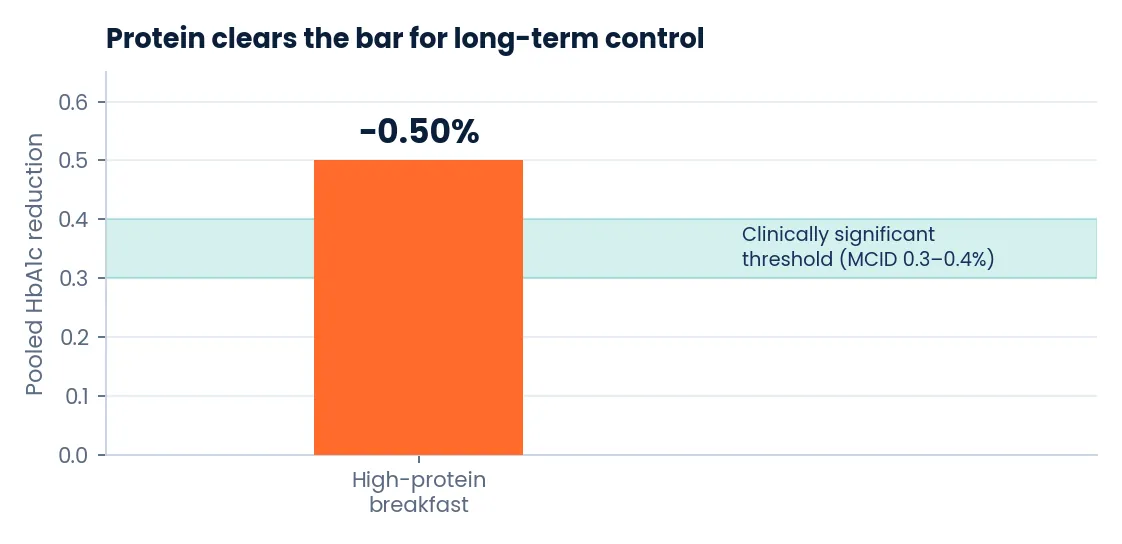
The analysis showed that high-protein breakfasts led to a pooled reduction in HbA1c of 0.50%. This is a noteworthy achievement, as it surpasses the clinically significant threshold (MCID) of 0.3%–0.4% that's essential for effective diabetes management.
But it's not just about feeling full; there's a biological reason behind this. The active GLP-1 response is at work here. Much like the action of modern metabolic medications, whey protein boosts the secretion of GLP-1, which enhances insulin sensitivity and slows down digestion. 💉
📈 Worth remembering
The DECODE study revealed that glucose levels measured two hours after eating are more closely linked to cardiovascular mortality than fasting glucose levels.
🫘 Beans for Breakfast? The Surprising Power of Legumes
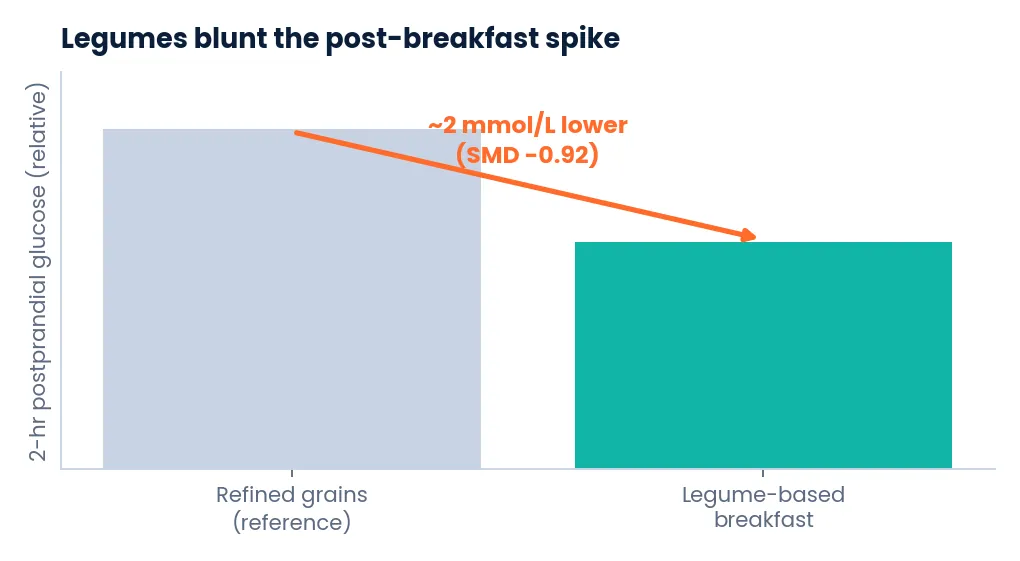
While protein may be the long-term champion, starting your day with legumes has proven to be a fantastic short-term strategy for managing blood sugar. Swapping out traditional refined grains for beans can lower those pesky 2-hour postprandial glucose spikes by nearly 2 mmol/L, which translates to a Standardized Mean Difference (SMD) of -0.92.
Legumes scored impressively in the study, but it's not just about the results; the preparation methods play a crucial role too. The findings spotlight certain traditional preparations that stand out:
🌱 Adzuki beans, soybeans, and black beans
🫓 Foxtail millet, especially when made into a fermented dosa
The fermentation process, along with the slow-release properties of these plant proteins, helps keep blood sugar levels steadier than modern wheat-based options.
🌾 The Fiber Factor: It's All About Viscosity
Fiber is often touted as a health hero, but this meta-analysis makes it clear that not all fibers are created equal. When it comes to controlling blood sugar, viscosity is the key player. Viscous soluble fibers, like pectin and guar gum, form a gel-like substance in the digestive system. This transformation brings two main advantages: it slows down gastric emptying and decreases the speed at which glucose is absorbed in the small intestine.
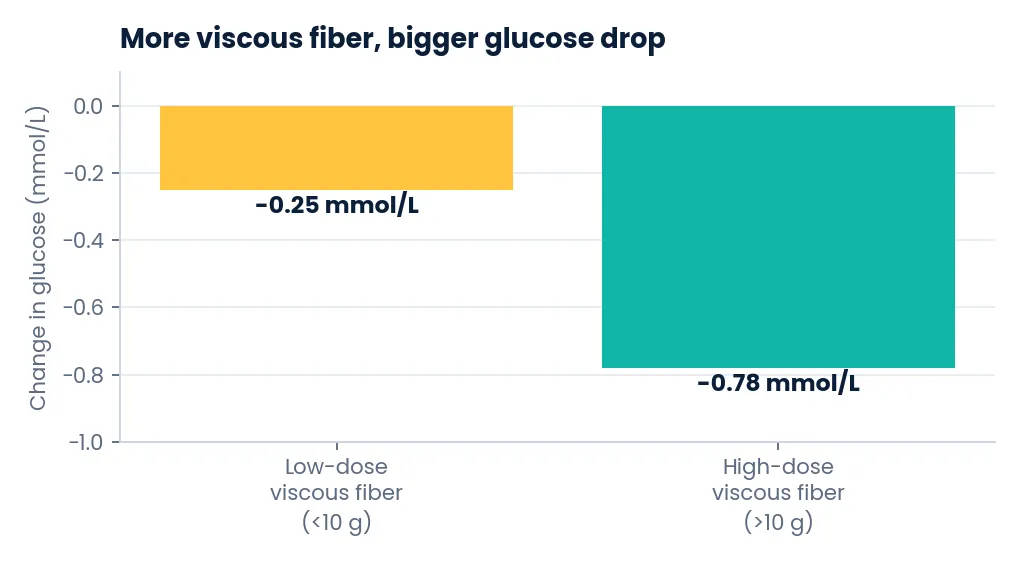
The findings emphasize that the amount of fiber matters. High-dose viscous fiber interventions—defined as more than 10g—resulted in a notable drop of -0.78 mmol/L in glucose levels.
🎯 The "Standard Breakfast" Paradox
In the SUCRA models that rank various diets, "Standard Breakfasts" (which are often high in carbohydrates) surprisingly score quite well in some models. This raises an interesting question: why would a control diet perform so well when experimental diets, like those high in protein, show better results in clinical markers?
Researchers attribute this to a statistical quirk known as "star-like" network geometry. Since the standard breakfast serves as the central reference point for most comparisons, it can skew the rankings in its favor. Additionally, the model tends to combine 24-hour AUC (total daily coverage) with acute 2-hour peaks, which can obscure the specific benefits of protein and fiber.
✅ Despite the modeling oddities
The clinical evidence is clear: high protein and viscous fiber are the best options for improving patient outcomes.
⏰ Timing the Clock: The Dawn Phenomenon and Macronutrients
Breakfast plays a crucial role as a "key signal" for our body's daily rhythm. Research on "Carbohydrate Distribution" indicates that when you consume your carbs is just as important as how much you eat.
In the Pearce trial, researchers looked at a "CARB-B" group that had a breakfast loaded with 125g of carbohydrates compared to another group that spread out 70g of carbs evenly across meals. They discovered that loading up on carbs or choosing the wrong type in the morning significantly impacted daily glucose peaks. By focusing on protein and fiber during this initial metabolic window, you send a stabilizing signal to your clock genes that lasts throughout the day. 🧬
🍽️ Your Plate, Your Signal
The 2026 meta-analysis reinforces that while there's no single food that acts as a "magic bullet," the evidence strongly advocates for a shift towards high protein and high viscous fiber to manage those morning spikes.
If breakfast is the main signal for your body's daily rhythm and clock gene expression, what message are you planning to send it tomorrow morning? By opting for whey, eggs, or fermented legumes instead of refined grains, you're not just having a meal—you're actually programming your metabolism for the day ahead. ✨
References
- Fang, J.-X., Huang, F., Gu, Q., Meng, J., Zou, H.-M., Han, Y., Han, Y.-X., Liu, H.-Z., Ma, Q.-W., Chen, X.-S., & Wang, S.-J. (2026). Effects of breakfast macronutrient composition on postprandial glycemic control in patients with diabetes mellitus: A systematic review and meta-analysis of randomized controlled trials. Frontiers in Endocrinology.
- Xander, H. K. (2026). Protein After 50: A practical guide to building meals that support strength.