


🧮 Goal: A step-by-step guide to daily energy, protein, carb and fat targets for clean muscle gain
If you want to build lean muscle effectively, it's all about finding the right balance between progressive resistance training, proper recovery, and smart nutrition. Your genetic body type plays a role in your growth potential, but making specific dietary tweaks—like upping your daily calorie intake and aiming for 1.5 to 2.0 grams of protein per kilogram of body weight—is crucial for making progress. 💪
Not eating enough is a common hurdle for many athletes, and the fix is often eating more frequently or leaning on high-energy supplements. A balanced macronutrient approach matters too: healthy fats fuel your energy, and carbohydrates help spare protein for muscle repair. Building lean muscle without piling on extra body fat is both a science and an art—a lot of lifters fall into the trap of either overeating or not eating enough, which can lead to slow progress or unwanted fat gain.
🎯 1. The Three Key Elements of Transforming Your Body Composition
To achieve clean muscle growth, you need to balance three essential principles:
🏋️ Progressive Resistance Training: This is what gives your muscles the stimulus they need to grow.
🍽️ Targeted Nutritional Strategy: This provides the energy, protein, and macronutrients necessary for muscle development.
🧬 2. Understanding Your Somatotype and Genetic Ceiling
Your body type, shaped by genetics, plays a big role in how easily you can build lean mass and how your body reacts to extra calories:
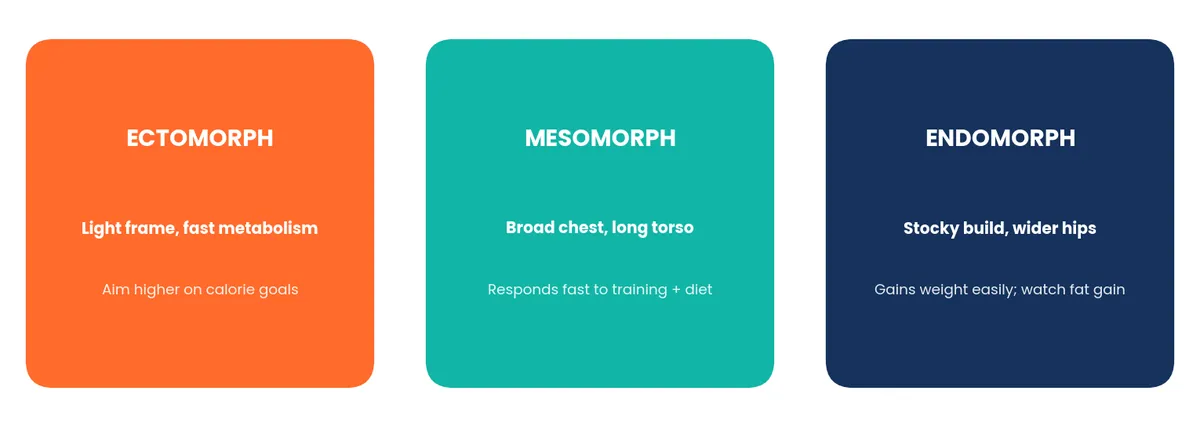
Setting realistic expectations for muscle gain is key. Your ability to add lean mass hinges on your training regimen, diet, genetic makeup, and motivation:
📏 Frame Size Matters: Athletes with a solid, broader frame can generally expect to gain more lean body mass compared to those with a slimmer build.
🧗 The Genetic Ceiling: In the early stages of a training program, muscle gains can be quite significant, but as you progress, those gains tend to slow down as you get closer to your genetic potential.
📊 3. Step-by-Step Macronutrient & Calorie Breakdown
If you want to build muscle without piling on unwanted fat, it's crucial to get your diet right. This means ensuring you have enough total energy, a good amount of protein, the right carbs, and healthy fats.
🥩 Step 1: Protein Requirements for Hypertrophy
Muscle is made up of about 20% protein, so getting enough of it is key during a mass-gain phase. While the general Recommended Dietary Allowance (RDA) for sedentary adults is 0.8 g/kg/day, those who train hard need quite a bit more:
Strength Athletes: Research suggests aiming for about 1.6 to 1.7 g/kg/day.
Endurance Athletes: They typically need around 1.2 to 1.4 g/kg/day.
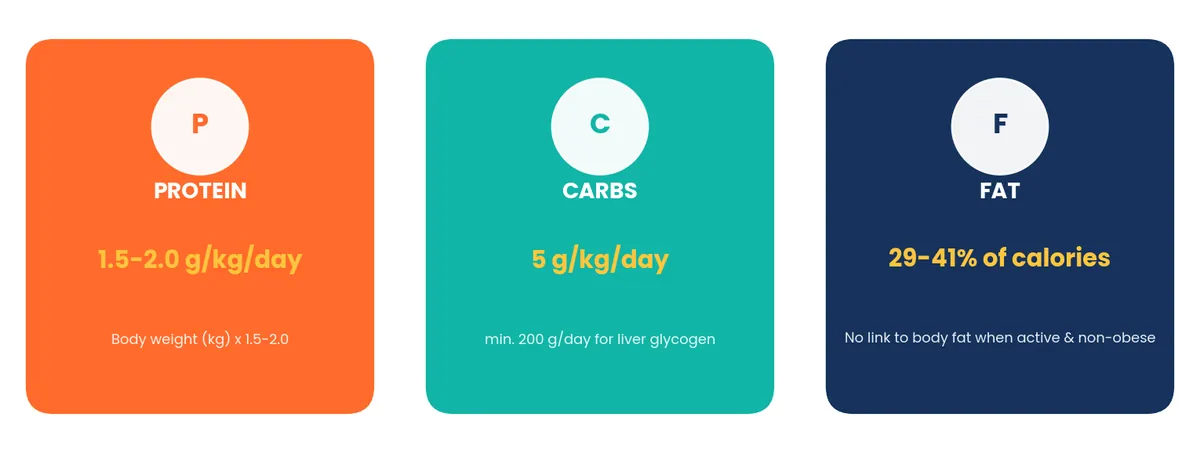
Target for Mass Gain: To effectively support muscle growth, aim for 1.5 to 2.0 g/kg/day of protein.
🍚 Step 2: Carbohydrates for Glycogen Replenishment
Intermittent High-Energy Sports: A solid baseline of about 5 g/kg/day of carbohydrates is recommended to keep your muscle glycogen stores topped up during intense training sessions.
Liver Glycogen Maintenance: To maintain liver glycogen levels, you should aim for at least 200 g/day of carbohydrates.
🥑 Step 3: Dietary Fat & Caloric Boosting
Many active folks fall into the trap of "fat phobia," mistakenly thinking that eating fat will automatically lead to weight gain or hurt their performance. But here's what sports science tells us:
No Direct Correlation: For active, non-obese athletes who aren't overeating, there's no link between the percentage of dietary fat and body fat percentage.
Elite Intake Ranges: Elite male athletes get about 29% to 41% of their total calories from fat, while elite female athletes consume around 29% to 34%.
The Calorie Booster for Hardgainers: If you're having a tough time gaining weight because of a small appetite, upping your dietary fat can be one of the most effective strategies to increase energy density without overloading your plate.
🏋️ 4. Training Prescriptions: Stimulating Muscle Growth
To really make the most of your caloric surplus, you need a solid exercise routine that channels that extra energy into building muscle instead of storing fat:
📈 For Muscle Hypertrophy (Size Gains): Studies suggest that doing multiple sets with 8 to 12 repetitions each is the sweet spot for boosting muscle size.
⚡ For Maximum Strength & Power: If you're aiming for raw strength, stick to multiple sets with fewer reps (around 4 to 6 per set) to enhance your neural adaptations and overall power.
🔄 Periodization: This technique, which started with Eastern European lifters, involves changing up your workout volume and intensity over several months. You'll transition from high-volume, low-intensity workouts to low-volume, high-intensity ones, all while incorporating rest periods to help with recovery and avoid injuries.
❤️ Integrated Training & Cardio: Mixing strength training with some cardio sessions is a great way to improve your overall health, boost endurance, and manage fat while you're in a bulking phase.
🎓 Professional Guidance: It's best to have your training programs designed by certified strength and conditioning professionals who can tailor them to your unique physical abilities.
🍔 5. Overcoming Calorie Limits: Strategies for "Hardgainers"
For many lifters, the biggest hurdle in building muscle is simply not being able to eat enough. Just telling someone to "eat more" often doesn't cut it, thanks to issues like a lack of appetite, hectic schedules, or stomach discomfort.
🎯 Proven hardgainer tactics
Increase Eating Frequency: Try to have 5 to 9 meals or snacks throughout the day instead of just sticking to 3 big meals.
Plan Food Accessibility: By planning ahead, you can make sure you have the right meals, snacks, and balanced macros on hand no matter where you are.
Incorporate Energy-Dense Foods: Add in calorie-rich options like peanut butter sandwiches, nuts, cheese, and energy bars to boost your intake.
Leverage Liquid Supplements: High-calorie liquid supplements (like Ensure, Sustacal, or Ensure-Plus) can pack in a lot of calories and nutrients without making you feel overly full.
📝 6. Actionable Implementation: Meal Plans & Macro Cookbooks
Turning your nutrient goals into actual meals requires some solid planning:
📖 Use Macro-Focused Meal Plans: Structured, week-long meal plans tailored for muscle gain can take the guesswork out of hitting your daily calorie goals.
👨🍳 Cook Macro-Balanced Recipes: Whip up delicious breakfasts, lunches, and dinners that are specifically designed with balanced macro ratios.
🔗 Match Diet with Exercise: Combine your macro-focused nutrition with a well-structured exercise routine to keep making steady progress toward your body composition goals.
In the end, while resistance training is key to stimulating growth, a well-structured, calorie-rich diet is essential for sculpting a more muscular physique. ✨
References
- Grandjean, A. (1999). Nutritional Requirements to Increase Lean Mass. Clinics in Sports Medicine, 18(3), 623–633. W.B. Saunders Company / Elsevier.
- DeSantis, A. (2020). Macro Cookbook for Men: 7-Day Meal Plans, Recipes, and Workouts for Fat Loss, Muscle Gain, and Health. Rockridge Press / Google Books.